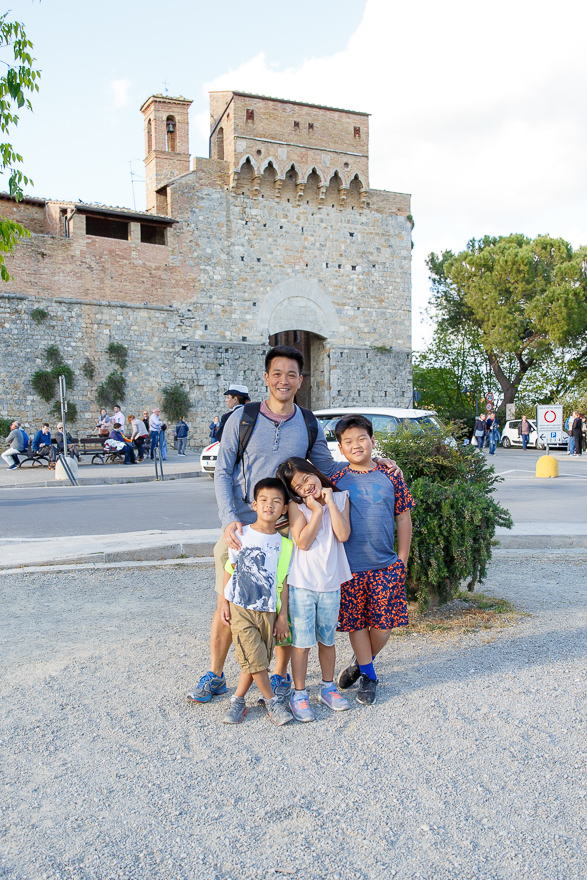
There once stood 72 tower houses within this double walled city, each built to demonstrate the wealth and power of the competing noble families. The fourteen that remain, rising proudly above its palaces, preserves the history of a feudal town controlled by rival factions ever ready for conflict.
San Gimignano mainly developed in the first three centuries of the Millennium, thanks to its favorable geographical position becoming an important transit stop for pilgrims traveling from France to Rome. The city flourished until 1348 when two thirds of its population was decimated by the Black Death. San Gimignano knew a long period of decline in the shadow of dominant Florence. This decline served to insulate San Gimignano from the influence of different architectural styles as there was little subsequent development. San Gimignano remained preserved in its medieval state until the 19th century when its status as a tourist and artistic destination began to be recognized. Today San Gimignano continues to preserve its authenticity thanks to the strict enforcement of the restoration principles.

 The Antinori family has been involved in the production of wine for over six centuries, through twenty six generations. Antinori nel Chianto Classico was opened in 2013 and served to relocate the company headquarters from its Renaissance palazzo in Florence to the hillside of Bargino, literally, the winery is folded into the hillside resembling a pair of rust-colored slashes in newly planted vineyards. “The idea was to bring the heart of the company back to the countryside where the wine is produced,” says Antinori.
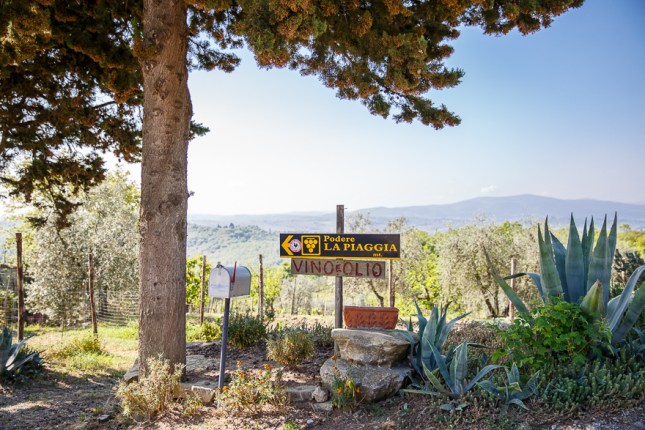 One of the experiences I insisted on having during our trip to Italy was a cooking class. There are many options and it becomes challenging to discern one from the next. Fortunately our hotel recommended a private class offered by La Piaggia. This experience was beyond all my expectations; it was intimate, immersive, elegant and casual all at once.
 Castello di Ama is a winery in Siena, Italy. Ama takes its name from a small hamlet that dates back to the 12th century. Five centuries ago, it was the hub of a florid farming and winemaking business overseen by a group of local families. In the 1970s a group of families, fallen under the spell of this magical spot, set themselves the task of reviving Ama’s past glories and of producing a Chianti Classico that would rank among the world’s most prestigious wines. Today Castello di Ama, one of Tuscany’s most famous wineries, is owned almost entirely by the couple Lorenza Sebasti and Marco Pallanti.
 Our Everyday